The programme
Ritual Core: structure, connection and consistency.
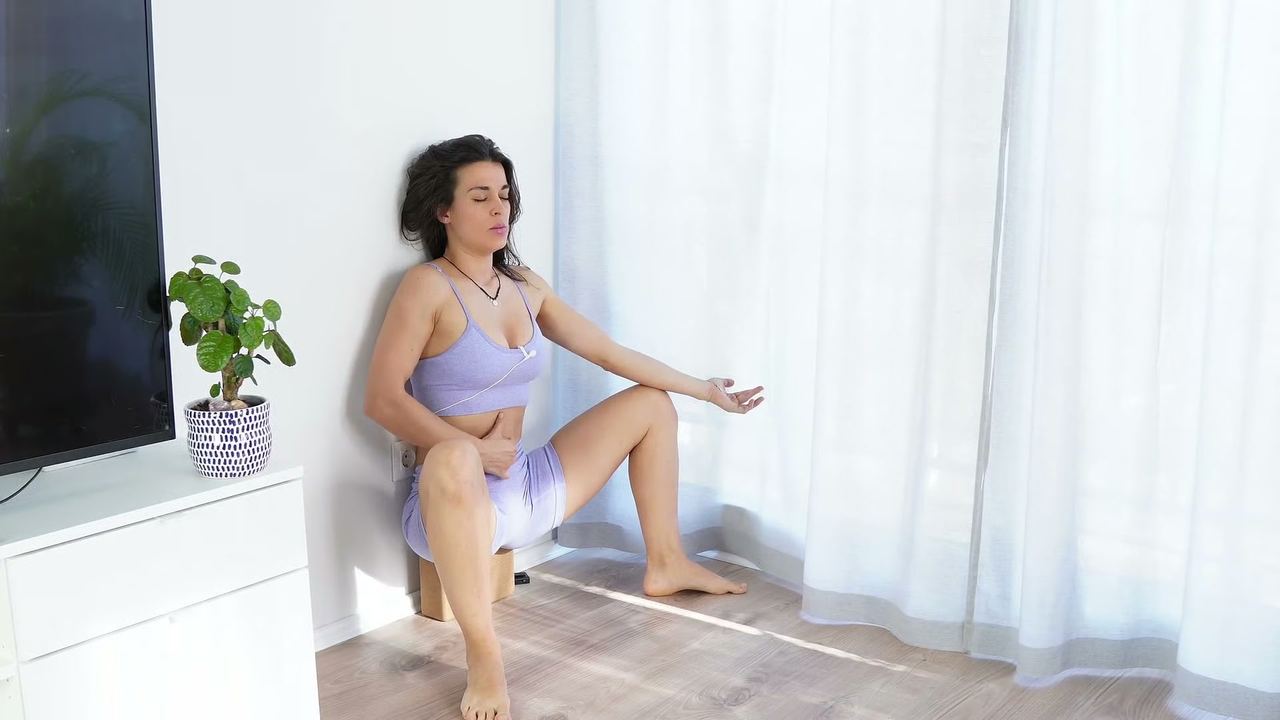
A guided practice programme for learning to activate your core and pelvic floor, coordinate that work with your breathing and maintain it when you exert effort.

Private beta
Enrolment isn’t open yet.
The private beta is currently for previous programme members. Joining the waiting list is free and carries no access or obligation to buy.
What is Ritual Core?
After years of sharing routines and hearing the question “but how do I organise myself to train consistently?”, I wanted to offer something more than stand-alone exercises: a path that helps you understand what you’re practising and how to progress.
Ritual Core organises that learning into four phases. You start by recognising activation, breathing and posture. Then you add resistance, held positions and movements that demand more strength and coordination.
I want you to leave behind the feeling of improvising and be able to practise with a clear direction. To understand what to do and what to pay attention to, without having to choose every day between all the videos you’ve saved.
What will you practise?
- Connecting body and mind. You learn to link your breathing with the activation and relaxation of the deep abdomen and the pelvic floor.
- Recruiting more muscle fibres. We introduce resistance and movement to practise that coordination at a more demanding level.
- Weaving my inner corset. We work on held positions, such as planks and bridges, while you keep breathing.
- Femininity and strength. We bring together what you’ve learned with full-body strength, mobility and ballet-inspired movements.
The guided practice, the exercise map and the technique resources help you understand each session. It isn’t only about completing repetitions: it’s also about recognising how you’re doing the movement and when you need to rest or reduce the difficulty.
Who is it for?
It may be for you if you want to work on your core and pelvic floor with a structure, if you find it hard to organise your practice, or if you want to understand better how to use your abdominal muscles when you exert effort.
You don’t need to be a mother. You may also want to return to this work years after giving birth. Your current situation matters more than fitting a label.
Ritual Core is exercise and physical education. It doesn’t replace an individual physiotherapy assessment or other healthcare. If you’re postpartum, recovering from an injury or have a health condition, consult a healthcare professional before you start. The programme isn’t designed for training during pregnancy; for that stage you can see the pregnancy guide.
A practice that fits into your day
Before you start, the app shows you the session, how long it lasts and the equipment you’ll need. In the programme we use a mat, bands, a ball and supports such as a chair or a wall.
When a session offers an Express version, you can choose it for the days when you have less time. Practices that are already short stay as they are. Always check the options for the specific session.
Consistency helps you progress, but doing more sessions doesn’t mean skipping ahead on the path. Your space shows the practice that counts and when it’s time to do an evaluation. Pace and results are individual.
How can I start?
Ritual Core is in private beta with students from the previous programme. Enrolment isn’t open yet.
You can take the self-assessment to get an initial estimate of your path based on your answers. It isn’t a clinical assessment and it doesn’t certify your muscular capacity.
If you’d like to be notified when new places open, join the waiting list. It’s free, it doesn’t commit you to buying and it doesn’t give access to the programme.
Access and frequently asked questionsYOUR STARTING POINT
Get to know your
starting path.
The self-assessment offers an estimate based on your answers. It doesn’t give access to the programme or replace a professional assessment.
Take the self-assessmentExplore the method